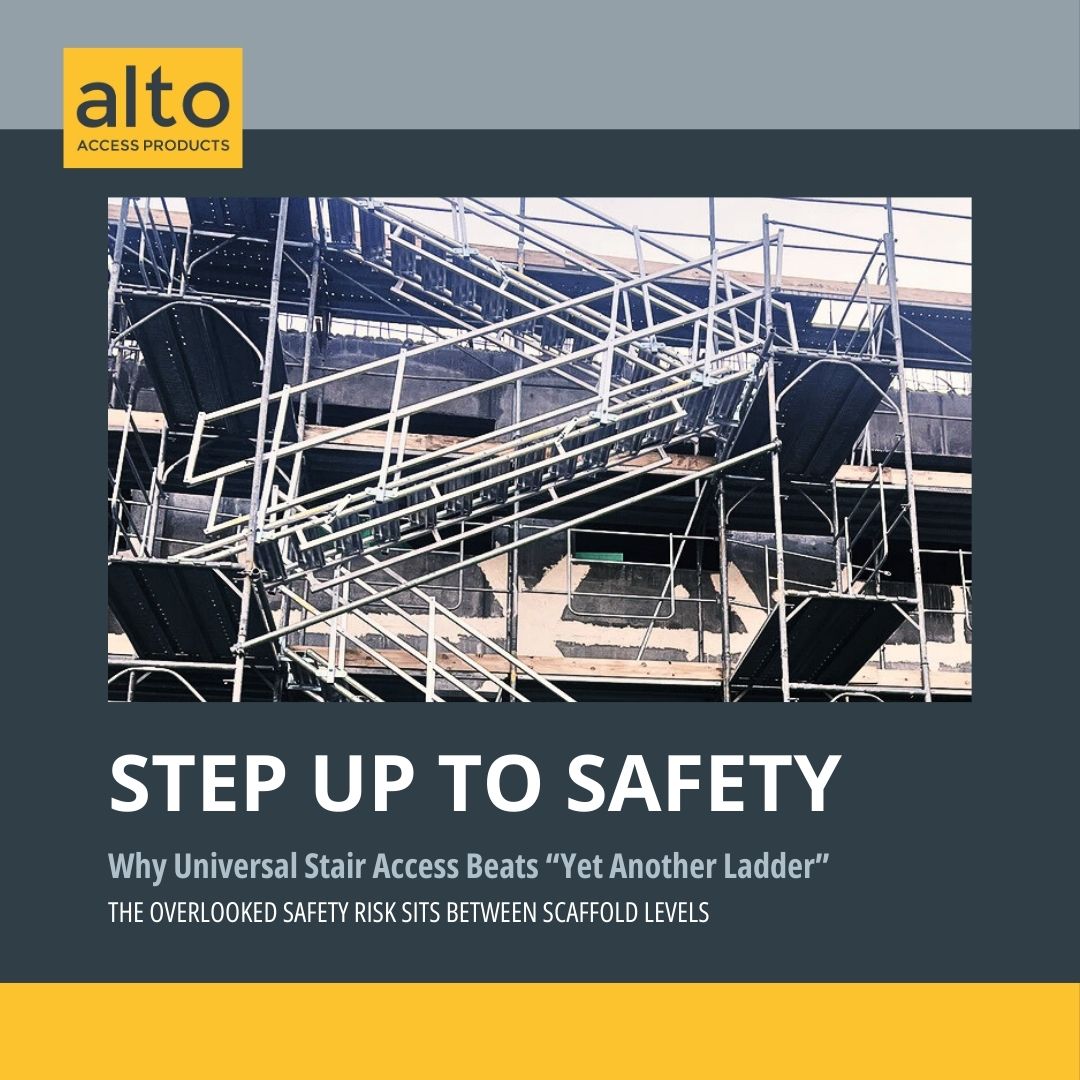
The overlooked safety risk sits between scaffold levels
Step up to Safety: Why Universal Stair Access Beats “Yet Another Ladder”
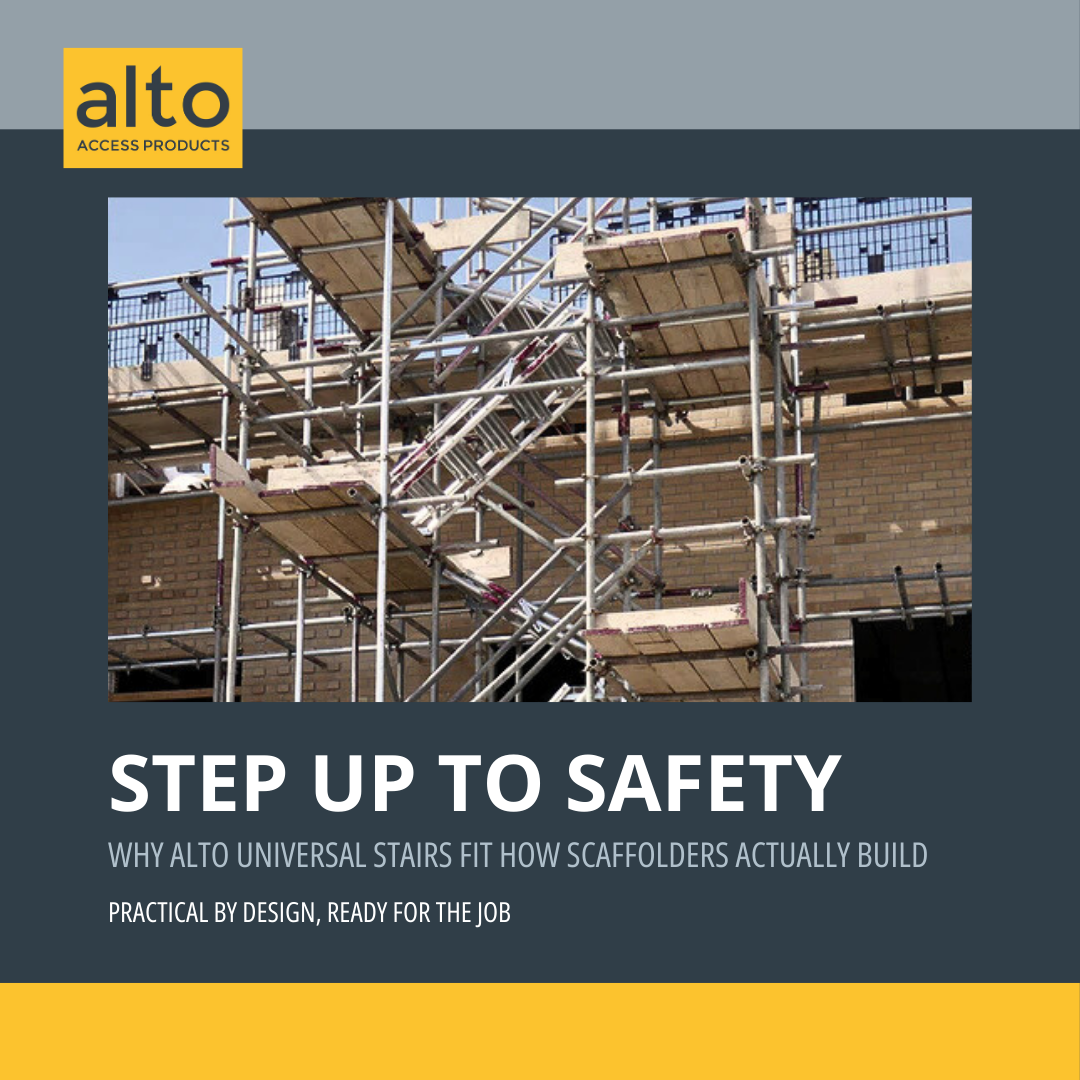
Most scaffold safety conversations focus on edges — guardrails, toe boards, ties. All essential. But the less obvious, higher-frequency risk sits in the middle of the structure: how people move between lifts, dozens of times a day, under time pressure.
- Falls often occur when people are moving
- When access is awkward, people rush.
- When it doesn’t quite fit, people improvise.
- When it takes too long to install properly, shortcuts appear.
- Transitions to and from the ladder create an unguarded position.
This is where access decisions start to influence behaviour.
Ladder access creates predictable pressure points
Ladders aren’t inherently unsafe. But on real sites, repeated use exposes the same issues:
- Variable lift heights that don’t land cleanly
- Awkward step-ups added to make access “work”
- Transition platforms introduced late
- Access routes that feel temporary rather than planned
Over time, these compromises normalise the acceptance of suboptimal solutions. Movement becomes less deliberate, especially late in the shift.
Universal Stairs address the root cause, not the symptom
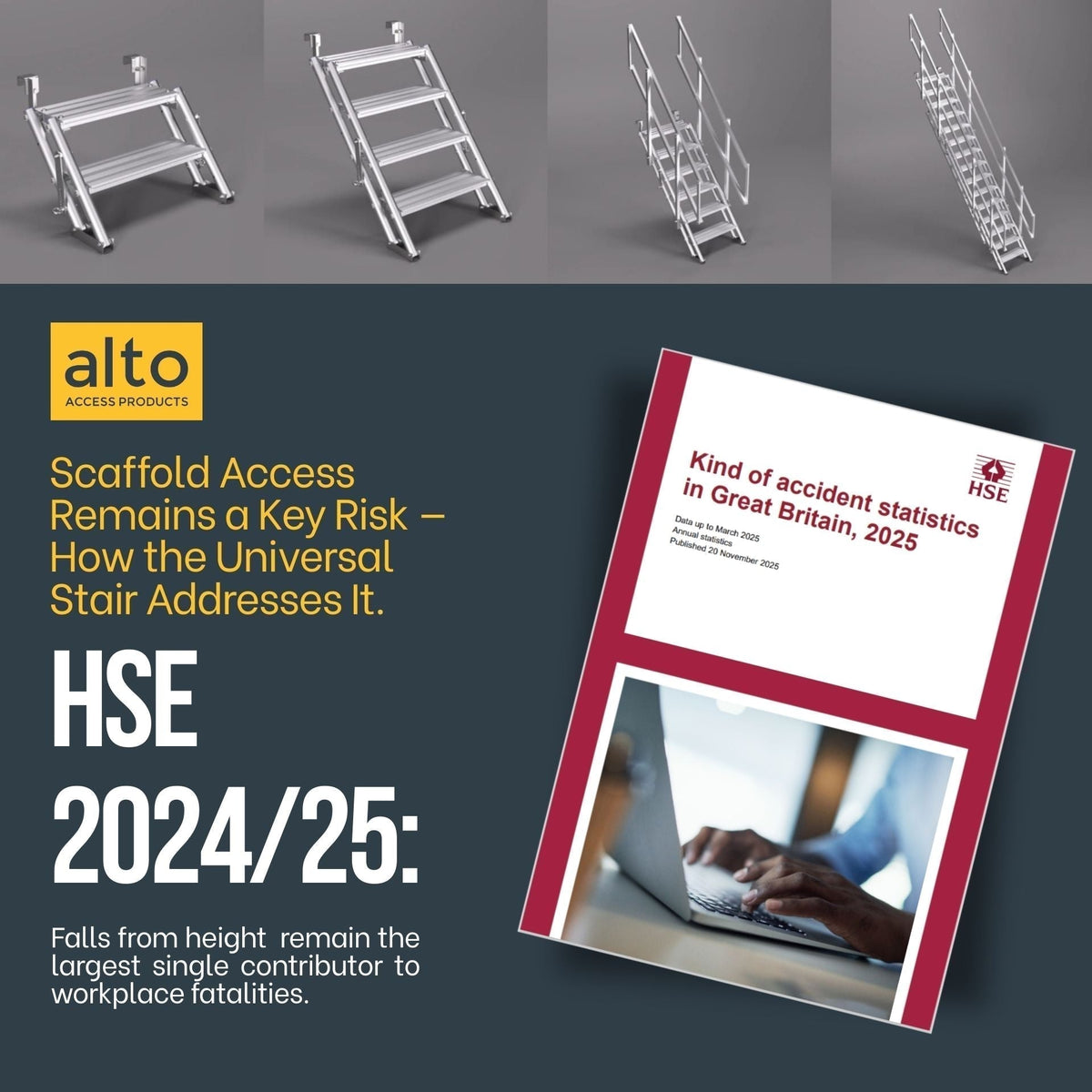
The Alto Universal Stair doesn’t try to replace ladders everywhere. It solves the two problems that cause most access-related safety compromises: variation and time - .
Designed for variable lift heights
Each Universal Stair unit covers a broad range of lift heights, allowing it to adapt to non-standard or changing scaffold levels without redesign.
- Each stair suits multiple lift heights
- No forced step-ups to bridge small gaps
- No additional transition platforms
- Consistent, level treads maintained across the adjustment range
- No more stepping into space
This flexibility allows access to be planned with confidence, even when lift heights aren’t perfect on paper or change during the build.
Installed quickly, without complexity
Universal Stairs are supplied pre-assembled and ready to unfold into position. They secure into the scaffold using a standard spanner.
- Minimal labour time
- No loose components to manage
- No specialist skills or tools
- Access installed early, not retrofitted
Faster installation reduces pressure on scaffolders and removes the temptation to “make do” temporarily. Access goes in properly, first time.

Better fit. Better timing. Better behaviour.
When access fits the scaffold and is installed without friction, people use it as intended.
- Planned routes stay clear.
- Improvised routes disappear.
- Safety improves not through rules, but through design.
This is where Universal Stairs deliver their real value — not as an add-on, but as a practical access decision that holds up under daily use.
Because the safest way between scaffold levels is the one that fits first time and goes in fast.