
History of Mobile Access Towers – Part Two

Introduction
This module examines the growth of mobile access towers in the UK during the 1960s and 1970s, the challenges of rapid adoption, and the emergence of industry standards and training. Understanding this period helps explain why regulation, trade associations, and robust design practices are central to safe tower use today.
- Growth and Proliferation
- During the 1960s and 1970s, tower use expanded rapidly across the UK.
- Misuse was common, leading to high levels of product damage — fleet damage rates of up to 25% per year were reported.
- Repairers of varying quality emerged, and some later became manufacturers.
- Traditional steel scaffold companies also entered the market by producing aluminium towers.
Variation in Quality
- Not all towers were well designed or well made.
- Poor-quality products and unsafe practices were widespread.
- Even today, unsafe or poorly manufactured products occasionally appear on the market.
Key Learning Point: A product designed for work at height must not only exist as a “solution” but must also be safe, robust, and compliant with industry standards.
- The Formation of PASMA
- In 1974, UK tower manufacturers formed the Prefabricated Aluminium Scaffold Manufacturers Association (PASMA).
- PASMA’s original purpose was to promote the correct use and development of aluminium towers.
- It began as a manufacturers’ trade association, run by volunteers, and continues as a not-for-profit body today.
- PASMA played a major role in accelerating the safe development and use of towers across the UK.
- Market Expansion and Challenges
- By the late 1970s, a wide range of tower products and brands were available (e.g. Genie/Protec, Safeway, Snap-Lok, Easibuild).
- Many brands were short-lived, being bought, sold, or ceasing production.
- At this stage, there was little or no regulation governing tower design, manufacture, or use.
Training and Education
- In 1976, PASMA began developing a training programme.
- By 1979, PASMA launched its first “Towers for Users” course.
- At the time, many practices now regarded as unsafe were common, such as:
- Placing platforms at the top of frames.
- Standing on unguarded platforms during assembly.
- Treating guardrails and toe boards as optional extras
- Early Design Weaknesses vs. Modern Standards
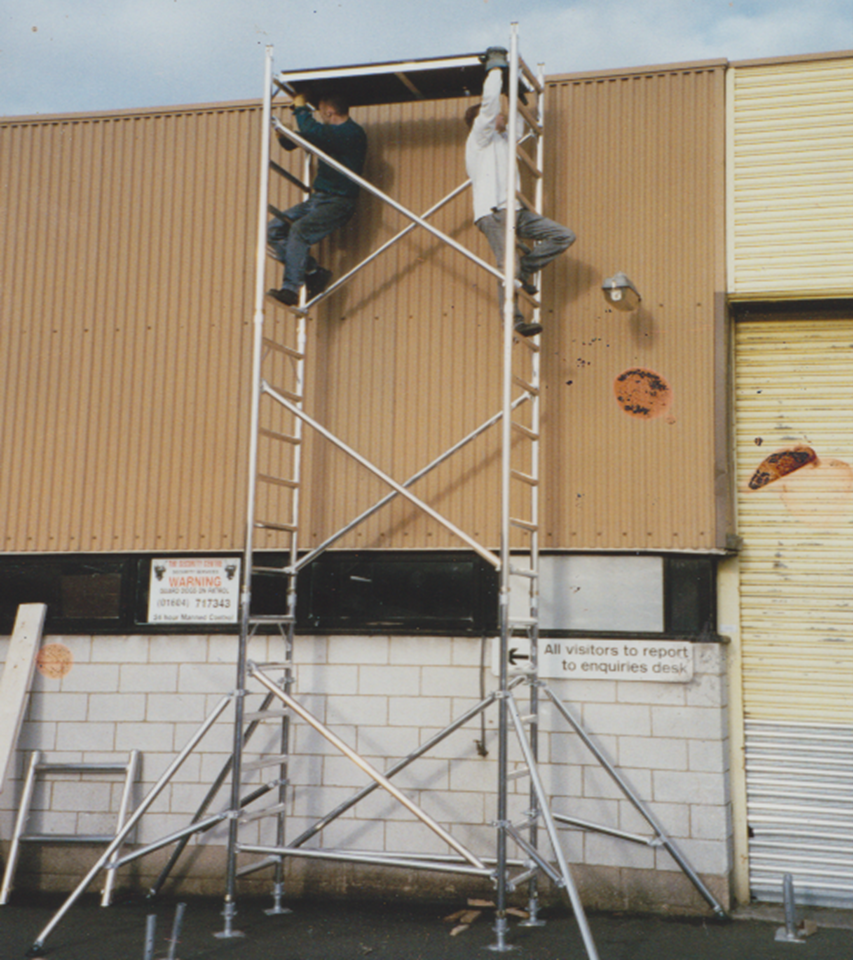
- Many towers of the time used a “zigzag” or “chase the brace” method, relying heavily on brace positioning for stability.
- In such designs:
- Braces were often misaligned or only loosely fixed.
- The tower’s stability relied on friction at the base plates.
- Braces acted as pin joints, free to rotate on the rungs.
Diagram: Example of “zigzag” or “chase the brace” tower design
The Alto Difference
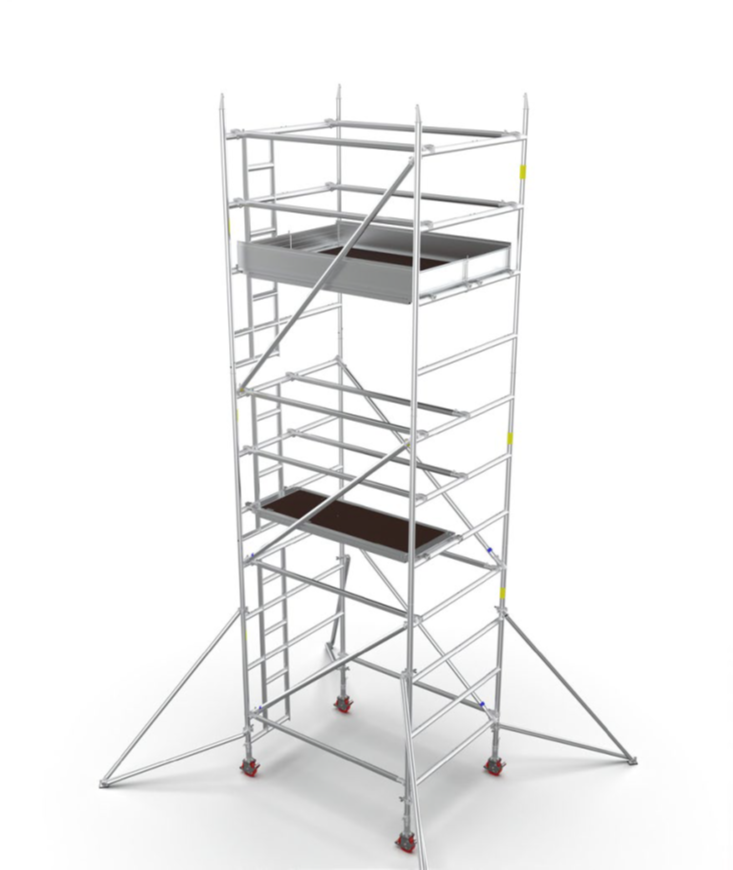
- Alto towers use “nodal bracing”, where diagonals meet horizontal members.
- This design creates significantly stronger and more stable structures compared with zigzag bracing patterns.
Diagram: Example of nodal bracing in an Alto Tower
Key Learning Point: Design integrity directly affects tower stability and user safety. Nodal bracing provides superior strength and reliability compared to earlier zigzag systems.
Summary
- The 1960s and 1970s saw rapid growth in tower use, but also misuse and inconsistent product quality.
- PASMA was formed in 1974 to promote safe tower use and has since played a central role in training and standards.
- Many unsafe practices were common until training and regulation began shaping safer methods.
- Alto’s use of nodal bracing demonstrates how thoughtful engineering improves tower safety and strength.
Learning Point: The transition from unregulated designs to structured standards highlights the importance of innovation, regulation, and training in creating safe work-at-height solutions.