
History of Mobile Access Towers – Part Three

The 1980s and 1990s
The beginnings of regulation and standardisation
By the early 1980s, mobile access towers were firmly established across construction, maintenance and industrial environments. However, despite widespread use, there was still little consistency in design, safety requirements or performance expectations between countries.
In 1980, PASMA introduced its first Code of Practice. At the same time, CEN – the European Committee for Standardization – began work on a document intended to harmonise tower design across Europe for the first time. This work would eventually lead to HD 1004, a Harmonisation Document aimed at aligning the basic variables of mobile access tower design.
Progress was slow. HD 1004 was not published until 1992 and did not become a full European Standard, EN 1004, for a further twelve years. The pace reflected strong national pressures to protect existing products and practices, often at the expense of meaningful progress towards common safety standards.
PASMA’s role in shaping standards
From the earliest stages of development, PASMA worked to influence the direction of travel for tower standards. This was not always straightforward. In several European countries there was resistance to change, with attempts to dilute requirements or restrict tower usability.
PASMA consistently argued for standards that delivered real safety improvements while remaining practical for users and manufacturers. Its influence during this period helped prevent the standard becoming either ineffective or overly restrictive.
Design changes introduced by HD 1004
Although limited in scope, HD 1004 introduced important minimum requirements that marked a clear shift in expectations. These included guardrails positioned at 1000 mm and intermediate guardrails with a maximum gap of 470 mm.
Many existing tower designs struggled to comply. Systems based on single 3-foot guardrails and wide rung spacing could not easily meet the new requirements, even when adapted. A small number of these legacy towers remain in use today, generally because:
- ageing fleets have not been replaced by some hire companies; and
- some manufacturers have been unwilling to risk telling customers that they are no longer going to support an obsolete product
The reality is that this induces compromised compliance and safety.
The emergence of GRP towers
In 1983, Genie Industries introduced the first practical GRP (glass reinforced plastic) tower. Based on Upright tower dimensions, it was offered as either a fully GRP system or a hybrid aluminium and GRP tower under the Protec brand.
Initial uptake was limited. Concerns around material durability, bonding methods and long-term reliability restricted early adoption. Over time, however, GRP towers established a niche in specialist environments such as pharmaceutical manufacturing, food processing and high-voltage applications, where non-conductivity and chemically inert properties offered clear benefits.
Despite this, GRP remains inherently more brittle than aluminium and is more susceptible to impact damage and cracking, which may not be immediately visible without close inspection. As a result, its use outside specialist sectors remains limited – and probably rightly so.
The arrival of the Alto tower
The early 1980s also saw a major design breakthrough with the introduction of the Alto tower. Designed, manufactured and promoted by four former GKN Kwikform designers, Alto was the first tower system to move away successfully from traditional 2-inch tube construction and introduce a more scientific basis to the bracing pattern.
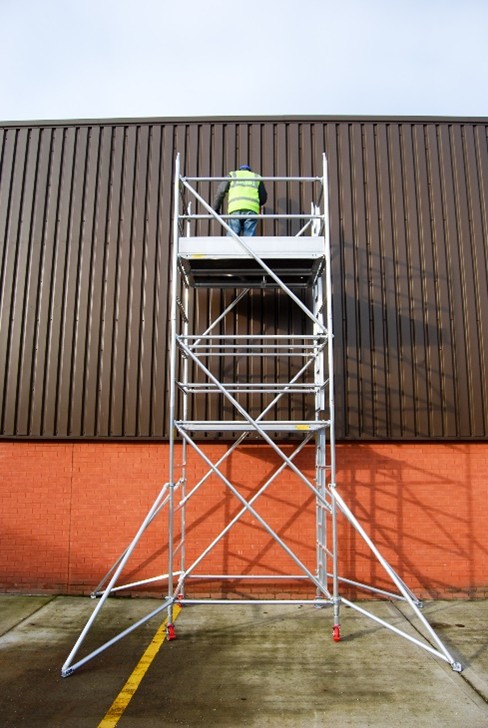
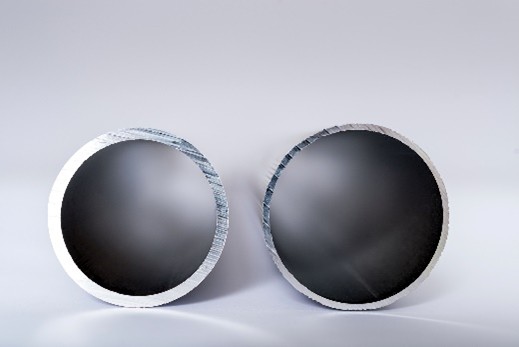
The Alto system uses 48 mm diameter tube with a higher wall thickness of 3 mm.
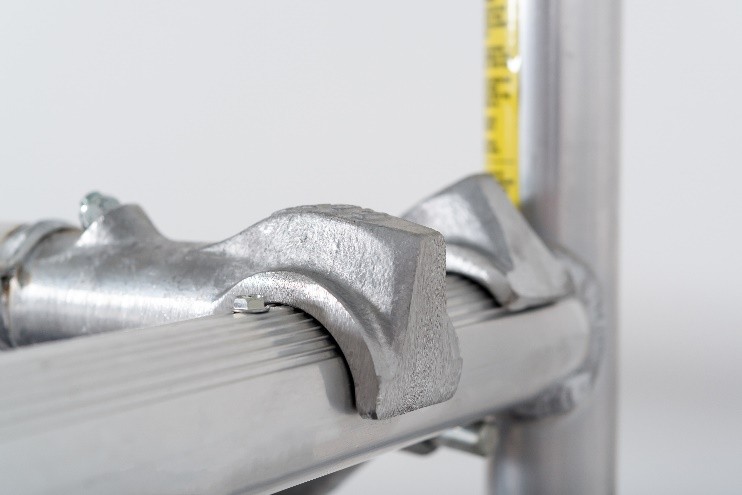
Combined with its nodal bracing pattern, this allows compatibility with standard scaffold tube and couplers while delivering higher working loads than conventional tower designs.
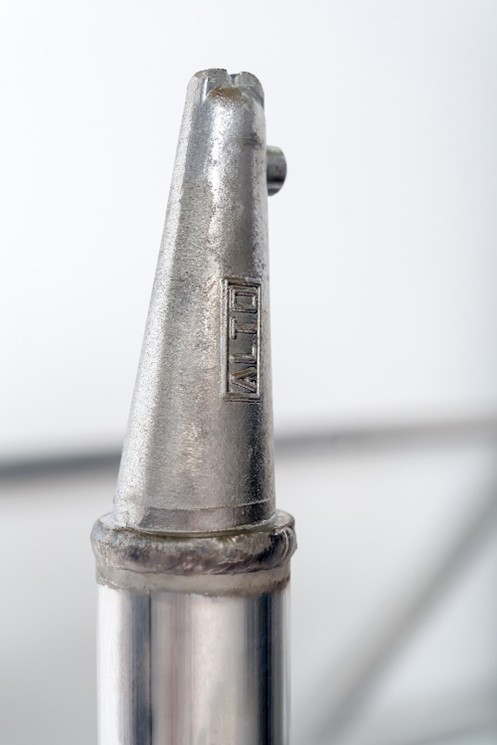
A key feature of the system is the offset conical spigot, which automatically locks frames together and prevents them form jamming during assembly and dismantling. This significantly reduces the risk of damage during dismantling and improves overall robustness in use.
Market consolidation in the 1990s
The rapid expansion of the aluminium tower market during the 1970s and early 1980s could not continue indefinitely. The economic recession of the 1990s triggered an almost inevitable consolidation, with a number of brands disappearing or being absorbed by larger manufacturers.
This period reshaped the industry, placing greater emphasis on compliance, durability and long-term value rather than rapid growth alone.
PASMA’s evolution
By the late 1990s, the industry had changed significantly. Towers were no longer exclusively aluminium, and safe use had become as important as design and manufacture.
Training, hire and installation had developed into specialist disciplines in their own right. Reflecting this broader scope, PASMA evolved in 1999 from the Prefabricated Aluminium Scaffold Manufacturers Association into the Prefabricated Access Suppliers and Manufacturers Association.
This shift marked a more mature industry, with increased focus on competence, safety and lifecycle responsibility.
Learning Point
The 1980s and 1990s marked a decisive shift for mobile access towers. The move towards European standardisation, combined with new materials, improved design thinking and market consolidation, drove higher expectations for safety, performance and consistency. This period laid the foundations for modern tower standards and reinforced the importance of robust design, compliant equipment and competent use.